
Family and multigenerational groups have a smoother resort arrival when the property organizes the party by households and needs rather than treating everyone as one large reservation. Pre-arrival planning, clear room relationships, simple luggage handling and an immediate plan for children or older relatives can reduce the confusion that often follows a long shared journey.
TL;DR
- Build the arrival plan around households, ages and mobility needs, not only the total room count.
- Confirm which rooms need to be near one another and which requests are preferences rather than guarantees.
- Give the group a simple first-hour plan for luggage, food, children's activities and room readiness.
- Designate one decision-maker for group-wide changes so the front desk is not receiving conflicting instructions.
A Family Group Is Several Small Trips Happening at Once
A ten-person family arrival can include grandparents who need to sit down, parents who are managing documents and children who need food or movement after a long journey. Treating that party as a single check-in transaction misses the operational reality. The hotel needs to know which guests belong together, who can authorize changes, which rooms are linked and which needs should be handled first.
That is why the strongest preparation starts with a household map rather than a flat name list. Each room should have a lead guest, occupancy, age notes where operationally relevant, arrival time and any confirmed accessibility requirement. Connecting-room or nearby-room requests should be recorded accurately without promising an arrangement the property has not confirmed. This makes the first hour easier to sequence.
The distinction matters because group check-in for meetings and events often prioritizes throughput. Family groups need throughput too, but their experience can fail even with a short queue if the rooms, luggage and people are separated in a way that creates more coordination work for the family.
Give Children and Caregivers an Immediate Landing Plan
Family-focused resorts reduce arrival pressure when adults can quickly understand what is available for children and what requires registration, age eligibility or extra payment. Club Med's current FAQ explains that many resort packages include children's clubs for ages 4 to 17, while programs for younger children may carry an additional charge and availability varies by resort. The editorial lesson is not that every property should copy an all-inclusive model. It is that age ranges, inclusions and exceptions should be obvious before a family reaches the desk.
On arrival, staff should prioritize the information that affects the next two hours: where to get food, where children can safely wait, whether a kids' program is open, and what the family should do if rooms are still being prepared. A long verbal orientation can wait. Parents under arrival pressure usually need immediate choices more than a complete property tour.
Digital tools can also remove a routine stop. Disney's Direct-to-Room service provides room-ready notifications and can let eligible resort guests bypass the front desk after online check-in. For large families, a similar model reduces the number of people who need to gather around a counter at once.
Keep Room Relationships Visible to Staff
Family groups often care more about room relationships than a meeting group does. Adjacent rooms, a room near an elevator, a crib in one room or a quieter location for an older traveler can influence the entire stay. The property should keep those relationships visible in the operating notes so a room move or maintenance change does not accidentally break the plan.
When the ideal arrangement is not available, staff should explain the trade-off clearly: for example, one room can be ready now while another nearby room will be released later, or all rooms can be placed together if the group waits longer. Giving the group a real choice is better than quietly optimizing for one variable and creating a surprise.
This is also where guest crisis communication offers a useful principle even in normal operations: communicate what is known, what action is being taken and when the next update will come. A delayed room is not a crisis, but the structure of a reliable update is the same.
Use One Group Contact Without Silencing Individual Needs
Large family parties can create conflicting instructions when several relatives ask for different room changes or activity times. Resorts can reduce confusion by agreeing on one contact for group-wide decisions such as room adjacency or shared transport. Individual guests should still be able to discuss private billing, medical, dietary or accessibility needs directly with staff.
This balance protects both efficiency and privacy. The group lead should not become the channel for sensitive information, and staff should not assume that one relative can authorize changes for every adult reservation. A simple rule is to centralize logistics while keeping personal information individual.
For remote properties, the same contact can help coordinate island transfer details across multiple inbound flights. If half the family arrives later, the resort can communicate the second transfer plan to the relevant guests without making the first arrivals repeatedly ask the front desk for updates.
Design the First Hour, Not Just the Check-In Moment
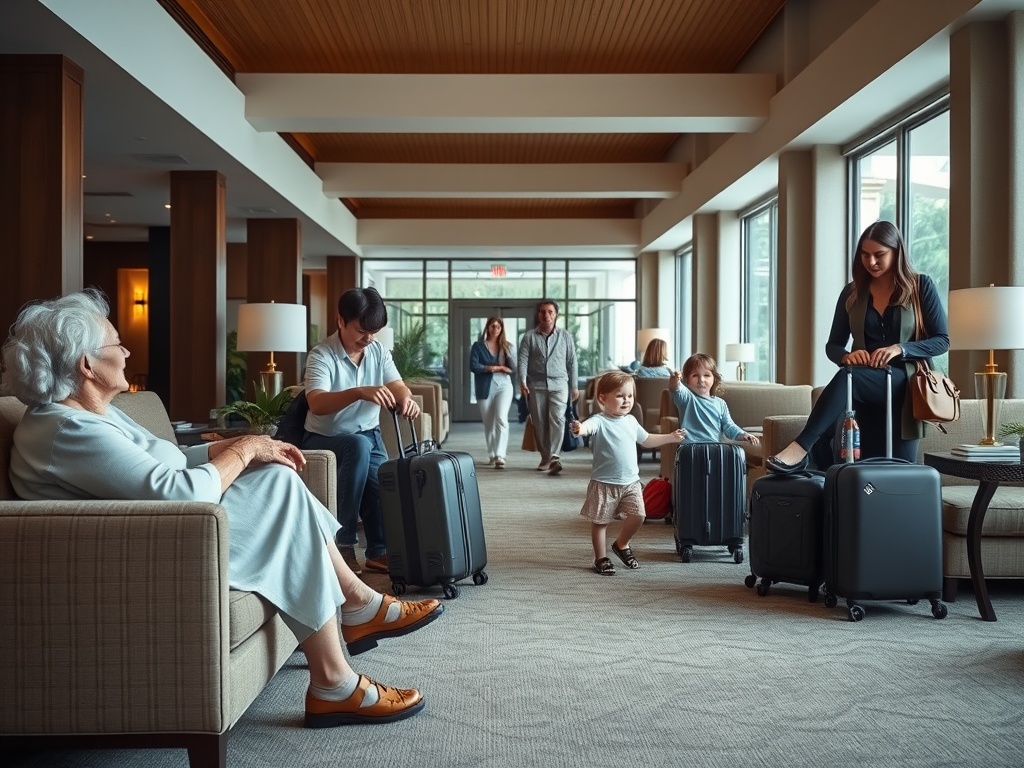
The most useful family-arrival audit follows the group for one hour after they enter the property. Where does luggage go? Who is waiting? Can someone get water or a simple meal? Do children know where they are allowed to be? Does an older guest have a comfortable place to sit? If only some rooms are ready, does the group know which room can temporarily hold essential items?
A well-designed first hour prevents the lobby from becoming the family's coordination center. Bell, front-office, food-and-beverage and recreation teams should understand the arrival pattern and the order in which information will be given. The goal is not a theatrical welcome. It is to lower the number of decisions exhausted travelers need to make.
For the next family or reunion block, create a one-page arrival matrix with household, room relationship, mobility or accessibility notes, child-age operational needs, luggage plan and expected arrival time. That small preparation often reveals conflicts early enough to solve them quietly.
Transportation sequencing deserves the same household logic. If several vehicles are arriving, staff should know which family members are in each one and whether a child seat, wheelchair-accessible vehicle or extra luggage capacity has been confirmed. That information helps bell and front-office teams prepare the right first response instead of asking the group to reorganize itself at the porte cochere after a long trip.
A Smooth Family Arrival Protects the Whole First Day
Family groups remember the first hour because it sets the rhythm for everyone at once. Organizing by household, clarifying room relationships and giving the party an immediate plan for food, luggage and activities can turn a complicated arrival into a manageable sequence without overpromising what the resort cannot guarantee.