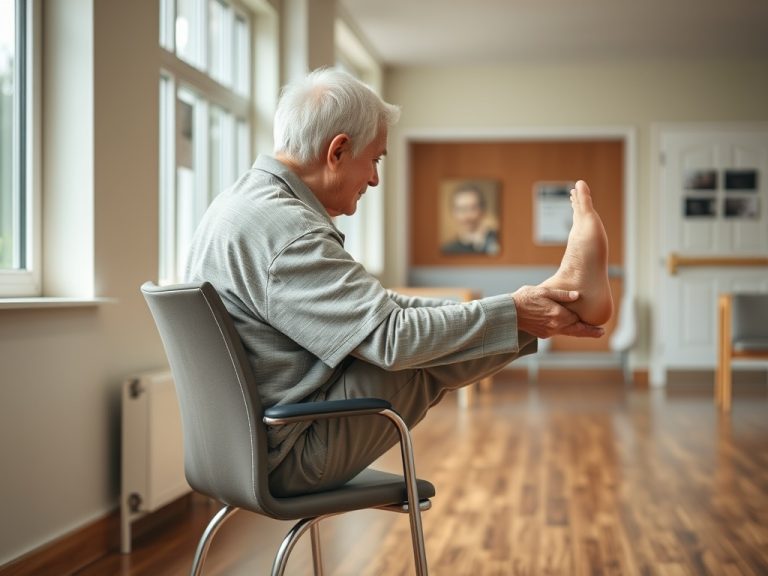
The best indoor cardio workout is the one that raises your breathing to the intended level without aggravating your joints, exceeding your space, or requiring equipment you do not have. For most beginners, brisk indoor walking, low-impact circuits, dancing, cycling, and step-based sessions are more sustainable than turning every bad-weather day into an all-out interval workout.
TL;DR: Match the workout to your space, impact tolerance, equipment, and desired intensity. Use the talk test to control effort, begin with a short warm-up, and choose either steady cardio or intervals rather than mixing random hard movements until exhausted.
Choose by constraint, not by hype
Bad weather changes the setting, not the purpose of the session. If the plan called for an easy run, the indoor replacement should usually be easy cardio. If it called for intervals, a structured bike, stair, or body-weight interval session may fit. Replacing every outdoor workout with maximal burpees can disrupt the rest of the week.
Preserve the training purpose and the overall weekly rhythm.
The American Heart Association’s activity recommendations describe moderate intensity as work that makes you breathe harder while still allowing conversation; vigorous activity makes talking much more difficult. That simple distinction is often more useful indoors than a watch estimate, especially when wrist-based heart-rate readings lag during fast changes or arm-heavy movements.
Before choosing a workout, check four constraints:
- Space: Can you step safely in every direction without hitting furniture?
- Impact: Do jumping and rapid direction changes feel comfortable for your feet, shins, knees, and pelvic floor?
- Noise: Will repeated landing disturb other people or make you shorten your movement?
- Equipment: Is the machine stable, adjusted correctly, and familiar enough to use without rushing?
Compare practical weather-proof options
| Workout | Best fit | Impact and space | Easy way to scale |
|---|---|---|---|
| Indoor walking intervals | Beginners and small spaces | Low impact; little space | Change pace or arm swing |
| Stationary cycling | Joint-sensitive users with equipment | Low impact; fixed footprint | Adjust resistance or cadence |
| Dance cardio | People motivated by rhythm and variety | Low to moderate; clear floor needed | Simplify steps or reduce bounce |
| Step-ups | Stair or stable platform available | Moderate leg demand; small footprint | Lower the step or slow the pace |
| Shadow boxing | Equipment-free coordination work | Low impact if feet stay grounded | Shorten combinations |
| Jump-rope intervals | Experienced users who tolerate impact | High impact; ceiling clearance needed | Use rope-free “ghost” turns |
No option is universally best. Cycling may be comfortable for someone with impact sensitivity but unsuitable for a person whose bike fit causes pain. Dance can be engaging but harder to control in a crowded room. Step-ups can raise heart rate quickly, yet fatigue may change foot placement. Select the tradeoff you can manage safely.
If lower-leg discomfort has appeared as you increase walking, running, or jumping, choose a low-impact substitute and review how to prevent shin splints during a new cardio routine before adding more impact.
Try one of three structured sessions
These are adaptable templates, not medical prescriptions. Warm up with gradually faster movement and finish by letting breathing return toward normal.
Quiet-apartment cardio flow
Cycle through brisk marching, side steps, controlled knee lifts, shadow boxing, and a comfortable squat-to-chair or sit-to-stand. Work at a pace that allows short sentences. Keep the feet grounded if impact or noise is a concern. Repeat the sequence only while coordination remains clean.
Machine-based changing-pace workout
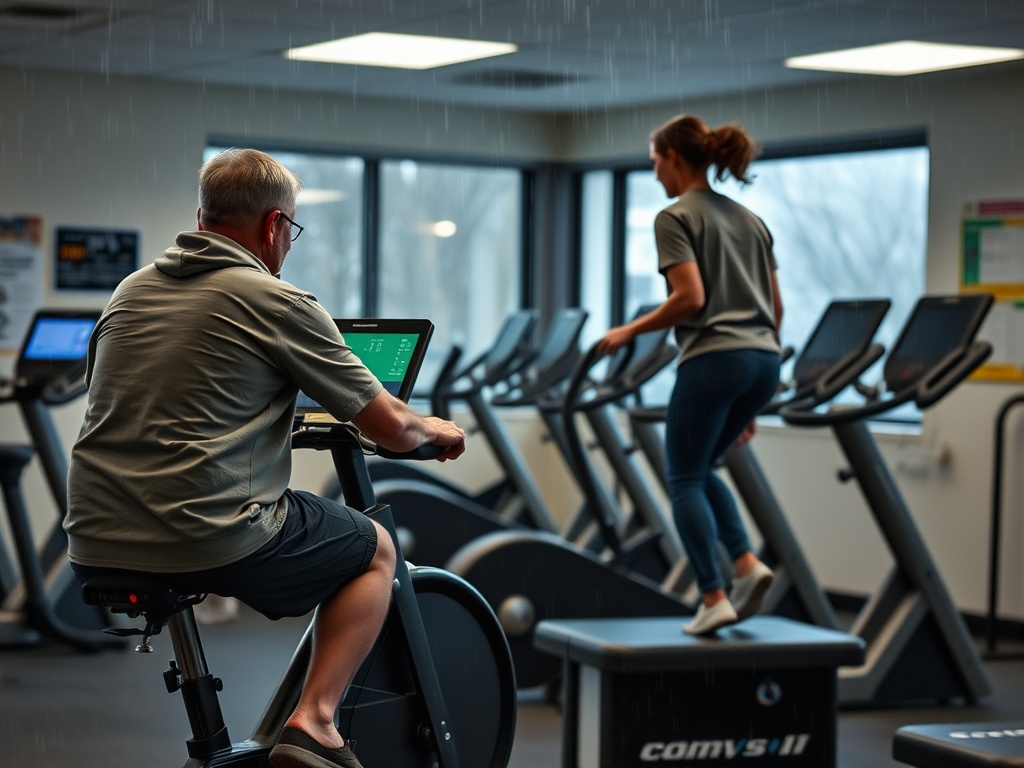
On a bike, treadmill, rower, or elliptical, alternate sustainable work with easier recovery. The work segments should feel purposeful but repeatable, not like a sprint you survive once. Use resistance and pace to change intensity; avoid extreme settings that distort posture.
Low-impact conditioning circuit
Combine a step or march, a supported lower-body movement, an upper-body rhythm such as boxing, and a gentle recovery movement. This provides variety while keeping the session organized. If strength quality matters the next day, avoid taking the leg movements close to muscular failure.
Control intensity without chasing calorie numbers
Machine displays and wearables can estimate calories differently, so treat those numbers as rough feedback rather than proof of workout quality. The CDC explains that weekly aerobic activity can be accumulated, which means a shorter indoor session can still contribute meaningfully. Duration and effort should reflect your current capacity.
Use three checkpoints during the workout:
- Talk: Can you speak at the level expected for an easy, moderate, or hard session?
- Technique: Are your landings, posture, and machine mechanics still controlled?
- Recovery: Does breathing begin to settle during easier periods?
If coordination deteriorates or you feel faint, weak, unusually short of breath, or develop chest pain, stop. Seek urgent medical care for severe or concerning symptoms. People with medical conditions or new exercise limitations should ask a qualified clinician how to adjust activity safely.
Keep indoor cardio from crowding out strength
A rainy week can tempt you to add more classes or circuits simply because they are accessible. Count their fatigue honestly. A high-repetition squat circuit is cardio for the heart and muscular work for the legs. If it sits next to a lower-body strength day, reduce the circuit’s leg demand or move it.
Indoor cardio can also preserve activity during weight maintenance, but it should not become compensation for eating or a reason to chase unreliable calorie totals. The guide to protecting progress after reaching a goal weight explains how exercise fits within a broader maintenance system. Indoor sessions should preserve continuity, not create a second competing program.
Mistakes that make small spaces risky
Clearing only enough space for the first movement is a common error. Fatigue increases sway and step length, so remove cords, rugs, toys, and low furniture from the entire movement area. Wear footwear appropriate to the surface, and avoid using an unstable chair as a step.
Another mistake is copying complex choreography at full speed. Learn foot patterns slowly, then add pace. On machines, adjust fit before starting and keep loose clothing away from moving parts. If you are using a fitness app to direct the session, check whether its coaching adapts to your ability and whether its health claims are credible; a structured fitness-app quality audit can help.
Pick one weather-proof session
Choose one option from the table, define whether the day is easy or challenging, and schedule a start and stop time. Keep the first attempt conservative enough that you could repeat it later in the week. The win is not recreating perfect outdoor conditions; it is maintaining the purpose of your plan when the weather changes.