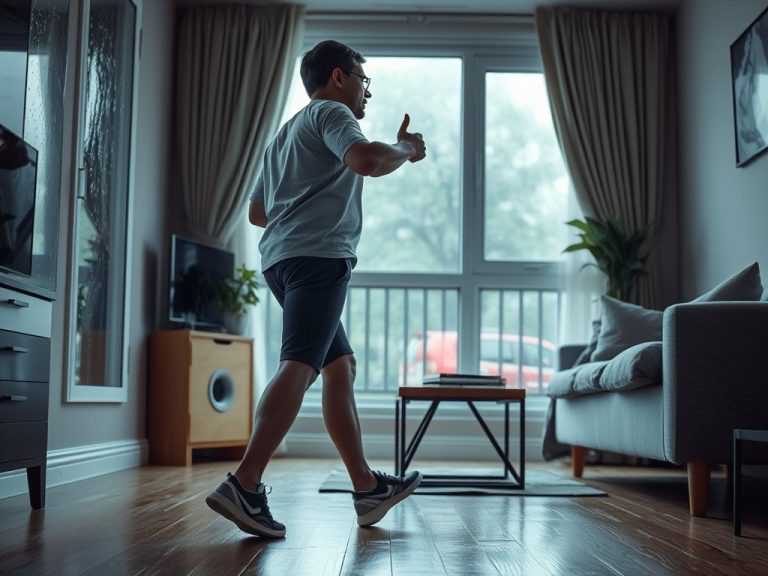
You cannot guarantee that shin pain will never occur, but you can reduce avoidable risk by increasing impact gradually, choosing tolerable surfaces and footwear, strengthening the lower body, and responding early to symptoms. The key is managing total load rather than searching for one perfect stretch or shoe.
TL;DR: Begin with a dose of walking, running, or jumping that your legs already tolerate, add only one major stressor at a time, keep easy days easy, and stop escalating if pain appears. Persistent, focal, or worsening shin pain needs assessment because “shin splints” can be confused with other conditions.
First, clarify what people call shin splints
“Shin splints” commonly refers to medial tibial stress syndrome, a pattern of exercise-related pain along the inner border of the shinbone. The National Institute of Arthritis and Musculoskeletal and Skin Diseases notes that shin splints are seen particularly in runners who are starting a program. The label is broad, however, and not every lower-leg pain has the same cause.
A stress injury, tendon problem, nerve issue, vascular problem, or chronic exertional compartment syndrome can produce overlapping symptoms. Self-diagnosis becomes less reliable when pain is sharply localized, present at rest, worsening despite reduced activity, associated with swelling or numbness, or changes walking. Those features justify prompt clinical evaluation.
Myth versus evidence-aware practice
| Common belief | More useful interpretation |
|---|---|
| “Stretching prevents shin splints.” | Stretching may feel good, but it is not a complete prevention strategy. |
| “The right shoe fixes the problem.” | Footwear can affect comfort, but training load and individual mechanics still matter. |
| “Pain is normal for new runners.” | Mild effort is expected; escalating bone or shin pain is not a required adaptation. |
| “Never run on hard ground.” | Surface is one variable; sudden changes and total impact may matter more than a universal surface rule. |
| “Rest until it disappears, then resume normally.” | Return should rebuild load progressively rather than jumping back to the previous peak. |
A 2025 systematic review indexed in PubMed found evidence favoring neuromuscular training and certain overpronation insoles in specific populations, while finding no support for static stretching programs or special socks as prevention. That does not mean everyone needs an insole. It shows why simple product claims should not replace individualized assessment.
Build impact tolerance in layers
Impact load comes from more than running distance. Pace, hills, jumping, sport, hard lower-body lifting, surface changes, body mass, and footwear transitions can all alter stress. Adding several at once hides the cause when symptoms appear.
Use a layered approach:
- Establish comfortable walking and daily activity.
- Introduce short running or higher-impact segments separated by easier movement.
- Repeat a tolerable dose before extending it.
- Add duration before adding frequent hard intervals or steep hills.
- Keep at least one lower-impact or recovery day between demanding impact sessions when starting.
There is no universal percentage increase that guarantees safety. Popular rules can be a planning prompt, but individual tolerance varies. A better signal is whether symptoms remain absent or settle normally and whether movement quality is stable across sessions.
Strengthen the system that absorbs the load
Calf, foot, hip, and trunk capacity can support running mechanics, although no single exercise prevents every case. A simple program may include controlled calf raises, a bent-knee calf variation, supported single-leg balance, step-downs, hip-strength work, and a squat or hinge pattern. Start at a level that does not reproduce concerning pain.
Coordinate this work with the 12-week strength-program framework. If running volume is increasing, keep lower-body strength progression conservative enough that the combined load remains recoverable. Strength and cardio should be planned together, not treated as separate stress budgets.

Treat shoes and surfaces as experiments, not cures
Choose shoes that fit comfortably, stay secure, and suit the activity. Replace footwear when its fit or condition has clearly deteriorated, but avoid assuming that a high price, cushioning category, or marketing claim guarantees protection. A sudden shift to minimalist shoes, spikes, a different heel-to-toe profile, or a much firmer model can itself require adaptation.
Likewise, treadmill, track, road, trail, and indoor court surfaces change speed, stability, incline, and repetition. Introduce a new surface gradually. Constantly running on a slanted road edge or rapidly adding hills may alter loading. If bad weather forces a sudden change, a lower-impact option from indoor cardio workouts can maintain aerobic work while reducing impact.
Respond to the first signs instead of testing them
When shin discomfort begins, do not repeatedly run through it to see whether it becomes severe. Reduce or pause the aggravating impact, note where and when the pain occurs, and substitute tolerable activity if appropriate. Ice or over-the-counter pain medicine may reduce symptoms for some people, but masking pain does not prove the tissue is ready for the same load. Medication has risks and should follow label and clinical guidance.
Seek medical assessment if pain is focal, severe, persistent, present during ordinary walking or at rest, associated with swelling or neurological symptoms, or fails to improve with sensible load reduction. Early assessment is particularly important for people with low bone density, menstrual changes, restricted energy intake, previous stress injuries, or other risk factors.
Return with a symptom-guided progression
After symptoms have settled and serious injury has been ruled out, restart below the workload that triggered the problem. Choose a flat, predictable setting, use shorter impact intervals, and leave recovery time between sessions. Progress only when the current dose does not cause worsening during the session, later that day, or the next morning.
Keep notes on duration, pace, surface, footwear, strength work, and symptoms. This makes the plan auditable. A balanced weekly routine can help you place impact days away from hard leg training and preserve genuinely easy recovery periods.
Prevention errors worth retiring
Do not add intervals, hills, longer runs, and new shoes in the same week. Do not use soreness as proof that the shin is “strengthening.” Do not stretch aggressively into pain or assume that massage changes bone stress. And do not copy another runner’s orthotic, cadence target, or foot-strike cue without a reason grounded in your own assessment.
Prevention is less dramatic: consistent exposure, adequate recovery, sufficient fueling, appropriate strength work, and early response to symptoms. None removes all risk, but together they make the training process easier to adjust.
Let your shins set the pace
For the next two weeks, keep the route and shoes stable, separate hard impact days, and log any symptoms during and after training. Add one variable only after the existing dose feels normal. If pain is already present or shows concerning features, pause progression and get a qualified evaluation before turning a minor warning into a longer interruption.