
Battery yard tools make the most sense for many homeowners with small to medium properties because they start quickly, require less routine engine maintenance, and eliminate exhaust at the point of use. Gas still has advantages for long, continuous, high-load work where refueling speed and established commercial equipment ecosystems matter more than noise, storage simplicity, or local emissions.
Battery vs Gas in Brief
- Choose a battery platform when your typical session fits comfortably within available battery capacity and you value low maintenance, quieter operation, and easy starting.
- Choose gas when you routinely need long continuous runtime, high output, remote work away from charging, or specialized equipment that is not practical on your preferred battery platform.
- Compare the whole system: tool, batteries, chargers, fuel or maintenance supplies, storage, replacement cycle, and local rules.
The Comparison Has Changed
A decade ago, battery tools were easy to categorize as light-duty alternatives. That is no longer a useful blanket assumption. Modern cordless platforms cover mowers, blowers, string trimmers, hedge trimmers, chainsaws, pole saws, snow equipment, and some commercial-grade machines. At the same time, gas equipment remains common because liquid fuel provides high energy density and can be replenished quickly.
The right choice therefore depends less on ideology and more on duty cycle. What are you cutting, how large is the property, how long do you work continuously, how far are you from power, and which tools need to share the same energy system?
Battery vs Gas Yard Tools at a Glance
| Factor | Battery tools | Gas tools |
|---|---|---|
| Starting | Usually push-button or trigger start | Typically pull-start or electric-start depending on model |
| Routine maintenance | No engine oil, spark plug, or carburetor service | Engine and fuel-system maintenance varies by tool |
| Point-of-use exhaust | None from the tool during operation | Combustion exhaust is produced during operation |
| Noise and vibration | Often lower, especially at idle because there is no engine | Typically higher because the engine runs mechanically |
| Runtime strategy | Swap charged packs or pause to recharge | Refill fuel and continue |
| Storage | Battery and charger care are central | Fuel storage, stabilization, and engine care are central |
| Best fit | Many residential sessions and platform-based tool collections | Long, remote, or continuous high-load work |
These are category-level tendencies, not performance guarantees. Individual models vary widely, and a high-output battery tool may outperform a small gas model while a commercial gas machine may outlast a homeowner battery tool in continuous work.
Where Battery Tools Have the Clearer Homeowner Advantage
Battery equipment removes several friction points from routine yard work. There is no gasoline to store for the tool, no carburetor to gum up, and no warm-up procedure. Starting is typically immediate. For homeowners who trim for 20 minutes, blow a driveway, or mow a modest lawn, that convenience can be more important than maximum theoretical runtime.
Battery platforms reward consolidation because one set of packs may run several tools. The trade-off is platform lock-in: changing brands becomes more costly after you build a battery collection.
From an air-quality standpoint, the U.S. EPA recommends electric and battery-powered lawn and garden equipment as options that are quieter and pollute less than gas-powered equipment. Its current guidance on reducing pollution from engines and yard equipment also emphasizes proper maintenance when combustion equipment is used.
Where Gas Still Makes Practical Sense
Gas is difficult to dismiss when the workday is long and uninterrupted. A crew can carry fuel and refill in minutes without planning charging windows or buying a large battery inventory. Remote properties, storm cleanup, heavy brush, extended chainsaw use, and some specialized tools can still favor combustion equipment depending on model availability and workload.
Gas can also make sense when a well-maintained existing fleet already fits the workload and replacing everything would create unnecessary cost and waste.
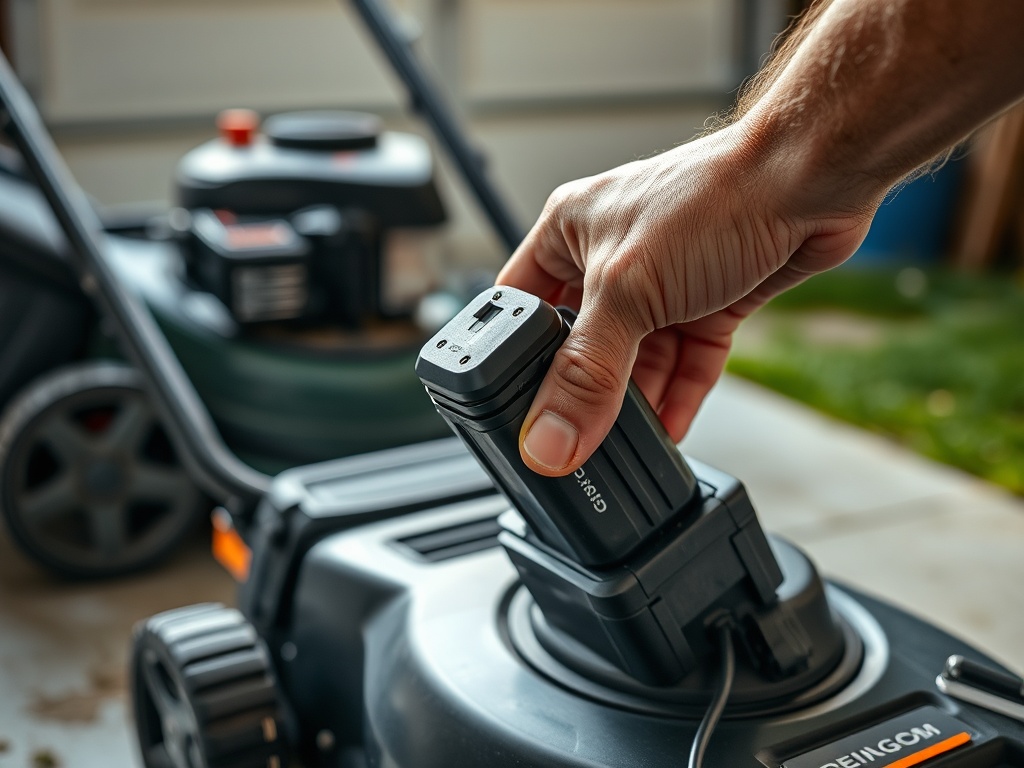
If you run several tools back-to-back, calculate the battery rotation before buying.
Cost: Compare Systems, Not Sticker Prices
A tool-only battery price can look attractive until you add enough high-capacity batteries and chargers to support the work. A gas tool can look inexpensive until fuel, oil where applicable, spark plugs, filters, maintenance time, and seasonal storage are considered.
Instead of trying to predict a universal lifetime cost, build a simple ownership list:
- purchase price of the tool;
- number and size of batteries needed, or annual fuel consumption;
- charger requirements and available electrical outlets;
- routine maintenance parts and service;
- storage space and safety requirements;
- expected replacement of wear items;
- value of sharing batteries across multiple tools.
Avoid assuming a fixed replacement interval. Battery and engine life both depend heavily on use, storage, temperature, and maintenance.
Performance: Match the Tool to the Hardest Normal Job
Do not buy for the easiest day. If your lawn is normally dry but becomes thick and wet in spring, evaluate mower performance under that heavier condition. If your blower is mainly for a patio but must also move wet leaves from a large property, that second task should influence the choice.
For saws and trimmers, headline dimensions alone do not show sustained-load behavior. Check manufacturer duty guidance, independent testing, warranty terms, compatibility, and parts support.
Battery Safety and End-of-Life Matter
Lithium-ion batteries require different storage and disposal habits than gasoline. Protect packs from physical damage and extreme heat, use compatible chargers, and follow the manufacturer's storage instructions. A damaged or swollen pack should be treated cautiously.
The EPA says lithium-ion batteries and devices containing them should not be placed in household trash or municipal recycling bins because they can create fire hazards. Its lithium-ion battery recycling guidance directs consumers toward separate recycling or household hazardous-waste collection points.
Gasoline also requires safe storage in approved containers and away from ignition sources. Whichever system you choose, energy storage is part of ownership, not an afterthought.
Noise, Neighbors, and Local Rules
Battery tools can reduce engine noise and eliminate exhaust at the tool, although blowers can still be loud from high-speed airflow. Check local ordinances for operating-hour or equipment restrictions.
If the yard is being redesigned for more outdoor living, lower-noise equipment may also make maintenance less intrusive. How to Make a Backyard Feel More Resort-Like explains how sound, lighting, planting, and zones work together in the feel of a space.
A Quick Decision Framework
Choose battery first if most of these are true: your yard is small or medium, work happens in short sessions, you can recharge at home, you want one shared battery platform, and lower maintenance is valuable.
Choose gas first if most of these are true: work is long and continuous, you are often far from charging, you need a specialized high-load tool, you already maintain a gas fleet, or battery inventory would be impractically large for the workload.
Consider a mixed setup if needs split: battery equipment can cover short frequent tasks while an existing gas tool handles occasional long sessions.
If you are moving toward a lower-input garden, No-Dig Gardening and Why Soil Structure Matters may also reduce some recurring cultivation work and change which tools you actually need.
Choose the Power System That Fits Your Yard
For most homeowners, the strongest battery advantage is convenience across a shared platform, while the strongest gas advantage is fast refueling for sustained work. Audit your hardest normal task, calculate the full system you need to complete it, and buy around that reality rather than the fuel label alone.
Home and garden information is provided for general educational purposes. Equipment performance, emissions rules, battery handling, fuel storage, and local restrictions vary by product and jurisdiction; follow manufacturer instructions and applicable safety regulations.[/