How 3D Printing Is Changing Night Guards, Dentures, and Surgical Guides
3D printing is changing dentistry most clearly by improving how certain appliances and planning tools are designed, reproduced, and adjusted. The strongest current uses are in workflows such as surgical guides, some dentures, and some occlusal appliances, where digital design and manufacturing can improve consistency and speed, though the technology is not automatically better in every case.
TL;DR: The real story is workflow, not hype. 3D printing can help translate digital scans and planning into physical devices with repeatability, but material choice, design quality, fit, and clinical judgment still determine whether the result is good for a patient.
Where the technology is already solid and where the hype outruns it
The FDA overview of 3D printing medical devices explains that additive manufacturing is now used across healthcare, including dental applications. The FDA page on the 3D-printing process is helpful because it breaks the workflow into imaging, software design, printing, and post-processing. That is exactly how to think about the technology in dentistry: as a chain of steps, not a magic box.
In practice, the current benefits are easiest to see in appliances and guides where digital planning already plays a big role. A printed item can be fast and repeatable. That does not mean every printed item is the best option for every patient.
| Use case | Why 3D printing is attractive | What still matters most |
|---|---|---|
| Surgical guides | Can translate digital implant planning into a physical guide for placement | Planning accuracy, case selection, and clinician judgment |
| Night guards | Can streamline design and remakes in digital workflows | Material quality, occlusion, comfort, and fit |
| Dentures | Can speed duplication or manufacturing steps in selected cases | Bite registration, esthetics, tissue support, and adjustments |
Why surgical guides often show the clearest patient benefit first
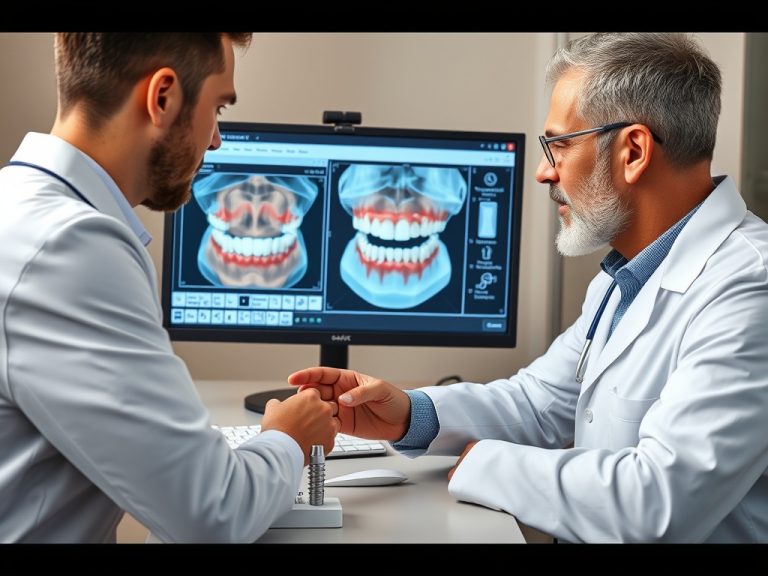
Guided implant workflows are easier for patients to understand because the planning-to-delivery pathway is visible. A printed guide can help carry a digital implant plan into the appointment in a controlled way. That matters most when the imaging, restorative goal, and surgical plan are all aligned. Patients who are already comparing implant timing or tissue needs may notice how this connects to the larger foundation questions around implant candidacy.
Night guards and dentures: the appeal is consistency and remakes
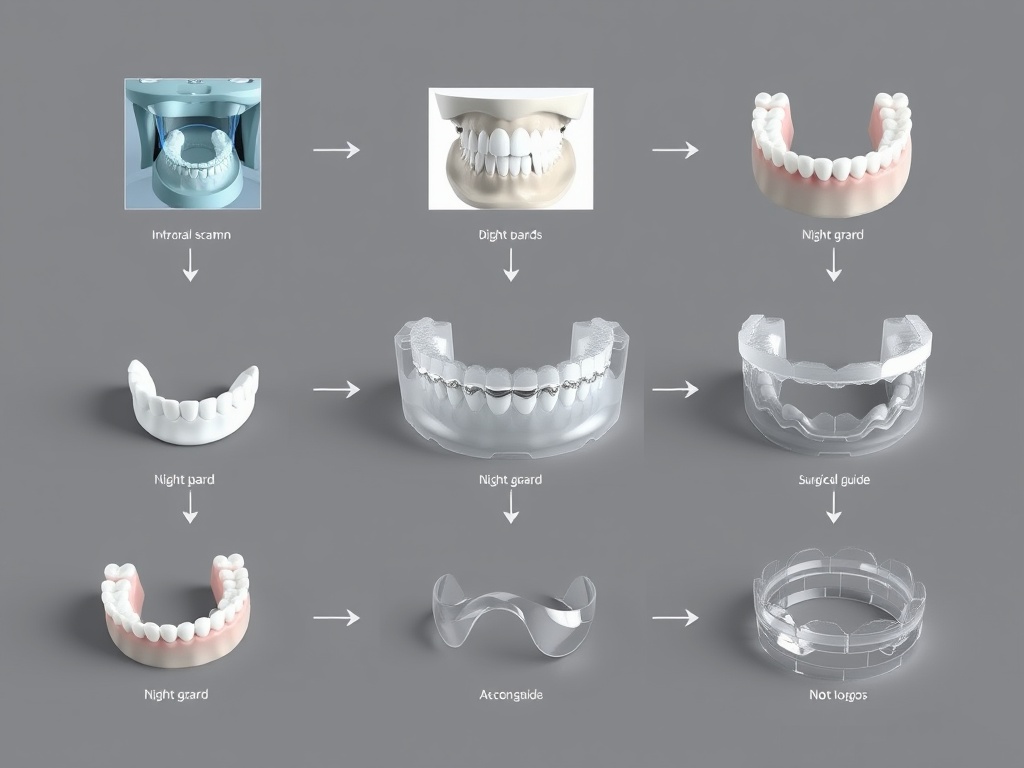
Printed night guards and denture workflows appeal to practices because digital files can make remakes or design tweaks more straightforward. That can be useful, but it does not remove the need for a good impression or scan, bite registration, and clinical adjustment. A beautifully printed appliance based on a poor bite record is still a poor appliance.
In orthodontics, digital design and manufacturing also shape how some systems are delivered, which is one reason families comparing teen braces and aligners are often hearing about scanning, printing, and lab workflows even when the appliance itself differs.
Proven benefit versus marketing spin
One helpful recent review on 3D printing in dentistry discusses the expanding range of dental applications while also showing that materials, indications, and evidence quality vary by product type. That is the right frame. Some uses are mature and practical. Others are promising but still dependent on careful case selection.
Questions patients can ask before trying a printed device
Ask what part of the workflow is being printed, why that version is better for your case, what material is being used, how remakes or adjustments are handled, and whether the office sees the technology as a convenience upgrade, a precision upgrade, or both. If the answer is only that it is newer, keep asking.
A printed device is only as accurate as the digital record
The workflow begins with the scan, impression, imaging, and bite information used to create the design. If those records are incomplete, a printer will reproduce the error with impressive consistency. Patients can ask how fit is checked before a night guard, denture, or surgical guide is accepted. Digital manufacturing can improve repeatability, but clinical verification remains essential because the mouth is not a static computer model and small discrepancies can affect comfort or function.
Material choice changes how the device performs
Different printed resins are intended for different uses, and their strength, flexibility, finish, and cleaning requirements are not interchangeable. The laboratory and dentist must follow the processing steps required for the selected material, including proper finishing and curing. Ask why that material suits the appliance and how long the office expects it to perform under normal use. The technology is meaningful only when the printed object is appropriate for contact with oral tissues and the forces it will receive.
Where digital files make remakes easier
A stored design can simplify duplication when a denture is lost or an appliance needs to be reproduced, although the mouth may still need to be rescanned if tissues or the bite have changed. Digital records can also make small design adjustments easier to communicate between the clinic and laboratory. This convenience should not replace a new fit check. A remake created from an old file may be fast, but it still has to match the patient’s current anatomy.
Questions that separate useful technology from novelty
Ask which part of the case is being printed, what problem the method solves, and how the result will be adjusted if the first fit is not ideal. Discuss material limitations, replacement options, and any difference in cost or turnaround time compared with a conventional workflow. The most convincing explanation will connect the printer to a measurable clinical benefit. A device should not be recommended simply because the office owns the equipment or because digital production sounds more advanced.
Create a clear visual workflow from intraoral scanning to digital design and finished dental devices, including a night guard, a denture component, and a surgical guide arranged in sequence. Keep the scene clinically realistic and organised. Use landscape orientation, soft studio lighting, no text, and no logos.