Can You Get Dental Implants If You Have Gum Disease?
Sometimes yes, but usually not while gum disease is active and uncontrolled. Dentists generally want the infection and inflammation treated first, because implants need healthy surrounding tissues and a patient who can maintain them well over time.
TL;DR: The better question is not simply whether gum disease blocks implants forever. It is whether the disease is active, how much bone and tissue support remain, and whether you can keep the site stable after placement. Treated and well-maintained periodontal patients can still become implant candidates, but the pathway is more selective.
Why periodontal health matters before anyone talks about the screw
Implants do not get cavities, but the tissues around them can still become inflamed or infected. The NIDCR page on gum disease explains how periodontal disease damages the structures supporting the teeth. If those tissues are already inflamed or bone support has been lost, implant planning has to start there rather than with the prosthetic end point.
The American Academy of Periodontology page on dental implant procedures also makes clear that implant success depends on careful planning and healthy supporting tissues. An implant is not a shortcut around untreated periodontal disease.
The usual sequence when gum disease is part of the picture
Dentists and periodontists often move through implant planning in phases:
- Diagnose how active the gum disease is and how much bone has been lost.
- Treat the disease with hygiene changes, non-surgical therapy, and sometimes more advanced periodontal care.
- Re-evaluate whether the tissues are stable enough for implant placement.
- Plan long-term maintenance because implant care does not end once the crown is attached.
That is why a patient who asks for implants may first hear about deep cleaning, maintenance, or periodontal referral. If you want to understand that part better, the deep-cleaning discussion is often the real first chapter.
When gum disease does not automatically rule implants out
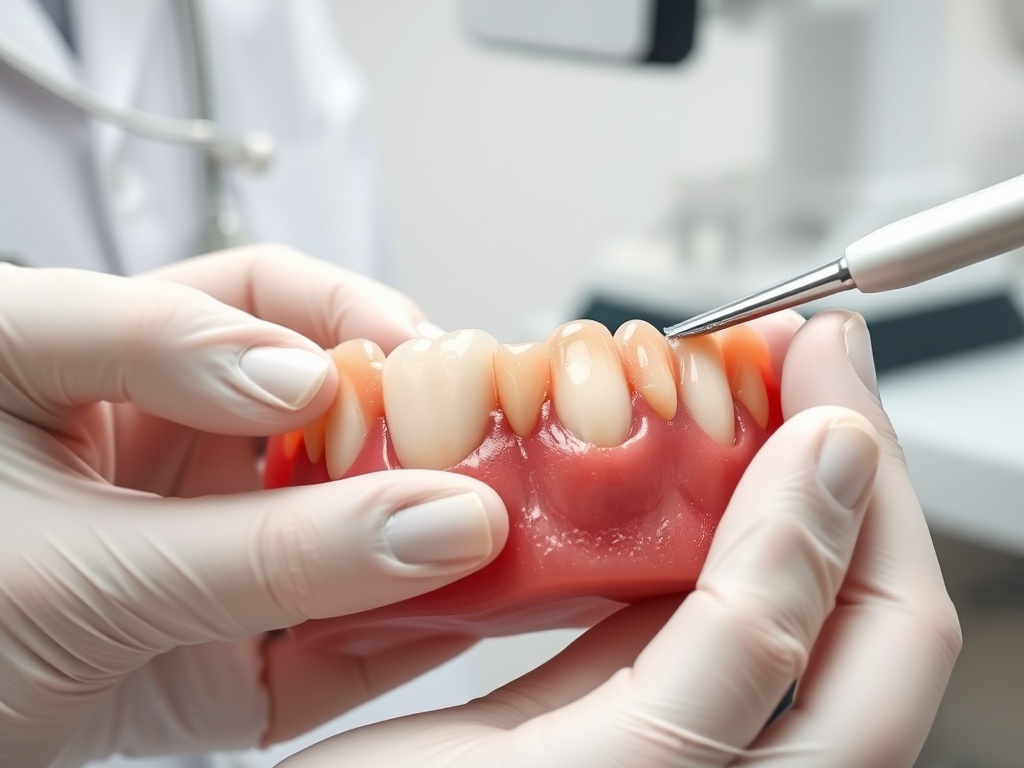
Gum disease history and active gum disease are not the same thing. Some patients have past bone loss but have achieved good control and attend maintenance visits reliably. Those patients may still be candidates, depending on site conditions and the rest of their health picture. The challenge is that implants placed into a poorly controlled mouth can develop their own tissue problems. The AAP page on peri-implant diseases is a useful reminder that implant inflammation is real and maintenance matters.
Cosmetic goals should not outrun periodontal reality
Patients sometimes arrive wanting implants mainly because they want a clean visual reset. That is understandable, but it can drift into the same short-term thinking seen in social-media smile trends that skip the biology. Gum health still sets the foundation, even when the final goal is cosmetic confidence.
Questions worth asking at the consultation
Ask whether your gum disease is active or historically controlled, whether the planned implant site has enough bone, whether grafting may be needed, how often maintenance will be required afterward, and what habits could jeopardize the result. A good clinician should be willing to explain what must be stabilized before implant placement becomes realistic.
What must be stable before implant surgery
The team will look for controlled inflammation, manageable pocket depths, effective plaque removal, and a maintenance routine the patient can continue. Smoking, poorly controlled health conditions, and inconsistent follow-up can also affect planning. The aim is not to demand a perfect mouth; it is to reduce active risk before placing a restoration that depends on healthy surrounding tissue. Ask which findings must improve and how long they should remain stable before the implant decision is reconsidered.
How bone and gum volume influence the plan
Past periodontal disease can leave an implant site with reduced bone or thin soft tissue even after the infection is controlled. Imaging and clinical measurements help show whether the site can support placement directly or may need grafting first. Those extra steps can alter cost, healing time, and the final position of the crown. Request a site-specific explanation rather than a general statement that implants are possible. Candidacy can differ from one area of the same mouth to another.
Maintenance begins before the implant is placed
Patients who establish reliable brushing, interdental cleaning, and periodontal visits before surgery are practising the same habits needed afterward. The office should explain which tools will be used around the future implant and how often professional monitoring is expected. This preparation also reveals practical barriers before treatment becomes expensive. If the proposed maintenance schedule is unrealistic, it is better to address that concern during planning than after the final crown has been attached.
Questions that clarify personal risk
Ask how previous bone loss affects the specific site, what signs would delay surgery, and how gum disease history changes the long-term outlook. Discuss grinding, medications, diabetes control, smoking, and any difficulty attending frequent appointments. It is also reasonable to compare an implant with a bridge or another restorative option when the risk profile is complicated. A strong consultation explains why one route fits the patient’s tissues, habits, and priorities instead of presenting implants as the automatic replacement for every missing tooth.
Create a realistic periodontal maintenance scene showing a clinician reassessing healthy-looking gums after treatment, with an implant model visible in the background as a future option. Highlight careful cleaning, tissue stability, and long-term follow-up. Use clean clinical lighting, landscape orientation, no text, and no logos.