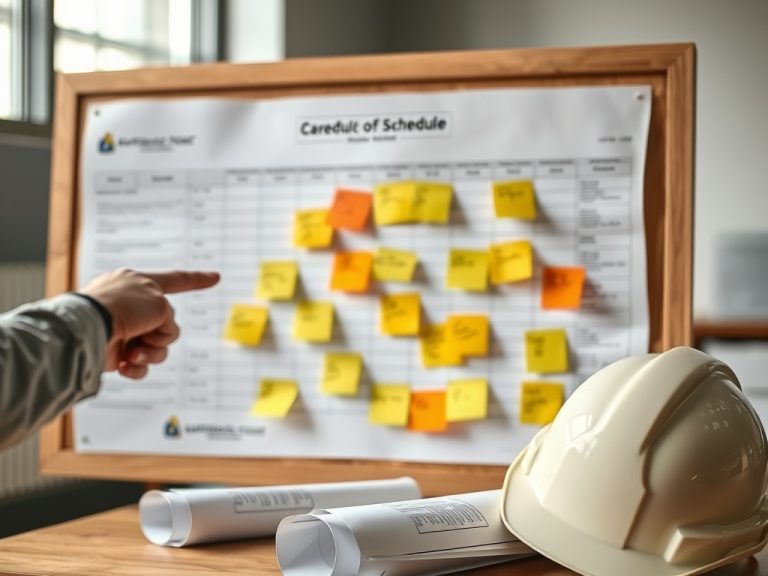
A closeout profitability review compares the final margin against the bid plan, approved changes, field costs, and unresolved risks so leaders can see why the job won or lost money. The goal is not to blame the field or estimating team. The goal is to turn a finished project into usable financial intelligence for future bids, staffing decisions, contract reviews, and production planning.
Key Takeaways: This article focuses on construction job profitability. Use the guidance as an educational planning framework, then confirm project-specific requirements with qualified professionals and local authorities.
Audience fit: Advanced readers can use this as a practical how-to reference without treating it as engineering, legal, compliance, or project-management advice.
Start with the margin story, not a spreadsheet dump
The first decision is to define the exact project condition. In construction and maintenance, vague decisions create vague accountability. For construction job profitability, teams should write down what is being evaluated, who owns the decision, what records prove the condition, and what standard or contract requirement controls the next step.
This keeps the discussion practical. It also prevents one common problem: treating a technical subject as a preference when it may be governed by code, contract language, safety requirements, design assumptions, manufacturer instructions, or owner operations. When teams are unsure, the safer path is to confirm the requirement before work proceeds.
Reconcile the four numbers that usually disagree
For related planning context, compare this topic with Using schedule analytics to spot risk earlier in complex projects, especially when decisions affect sequencing, scope, documentation, or follow-up work.
A useful review starts with the factors that most directly affect cost, quality, safety, and schedule. For this topic, the following items deserve a written check rather than a casual conversation:
- Lock the final contract value, including approved change orders and pending claims that have been resolved.
- Compare original budget, revised budget, committed cost, actual cost, and remaining accruals by major cost category.
- Review labor productivity, subcontractor buyout, material escalation exposure, equipment usage, rework, and general conditions separately.
- Ask what was controllable, what was contract-driven, and what was caused by unclear scope or sequencing.
- Convert the findings into bid notes, schedule assumptions, contract review flags, and project manager coaching points.
This kind of decision also connects to adjacent planning topics, so readers should treat the article as part of a broader project-planning conversation rather than a standalone rule.
Turn cost codes into decision clues
For a formal reference point, AIA Contracts guidance on closeout can help readers separate general practice from published guidance before applying this information to a live project.

The table below is a practical way to compare the main decision points. It is not a substitute for a specification, engineered design, safety plan, or local code review. It is meant to help owners, managers, and field teams ask better questions before money, labor, or schedule time is committed.
| Decision area | What to review | Why it matters |
|---|---|---|
| Original estimate | Baseline labor, material, equipment, subcontractor, and overhead assumptions | Shows whether the bid was realistic |
| Approved change log | Value, cost, markup, and timing of changes | Reveals whether change work helped or hurt margin |
| Actual job cost | Final posted cost plus accruals | Prevents false profit from late invoices |
| Schedule history | Delays, acceleration, and resequencing | Connects time pressure to cost movement |
Separate execution issues from estimating assumptions
Credible outside references can help teams separate common practice from formal requirements, especially when decisions affect safety, compliance, or project accountability.
The practical point is simple: do not let a spreadsheet, drawing note, product brochure, or field habit become the only source of truth. Published standards, adopted codes, safety regulations, contract documents, and project-specific specifications should be checked in the right order. Where those sources conflict, the project team should escalate the issue instead of making an informal field assumption.
Subjective preferences still have a place. A contractor may prefer one sequencing method, tool, inspection format, or material workflow because it fits their crew and equipment. That preference should be described as experience-based judgment, not as a universal rule. The distinction protects the reader and makes the article more useful.
Records that make the profit review credible
When requirements become code-, safety-, or standard-dependent, confirm the issue against Construction Financial Management Association instead of relying on field preference alone.
A closeout review is only useful when the records can be trusted. Keep the final owner billing, change order log, committed cost report, subcontractor back-charge notes, equipment allocations, labor productivity records, punch list costs, warranty reservations, and unresolved claim notes in one closeout folder. This allows leaders to explain margin movement without guessing. It also helps future project teams understand whether the issue came from pricing, production, scope clarity, schedule pressure, or late project administration.
This review step should be completed before the final decision is treated as closed. It gives the owner, project manager, field lead, and maintenance team a shared reference point. More importantly, it reduces the chance that the same avoidable issue will repeat on the next project, inspection, service call, or operating cycle.
For best results, attach the record to the project folder rather than leaving it in a private inbox. Include the date, responsible person, assumptions, supporting documents, open questions, follow-up action, and any limits on the decision. This small habit improves accountability without adding unnecessary bureaucracy, especially when crews, consultants, vendors, or maintenance staff change during the life of the asset or return months later to troubleshoot a related issue.
Close the loop with a usable profit review
Common mistakes usually come from missing records, unclear responsibility, or decisions made too late. Watch for these issues:
- Treating overbilling as profit before all costs and accruals are captured.
- Teams that want a wider cross-check can also read Pre-engineered metal buildings for commercial use: pros and cons before finalizing assumptions in the project record or maintenance plan.
- Mixing disputed change work with base scope performance.
- Reviewing only total gross margin and missing cost-code-level patterns.
- Ignoring schedule compression costs that show up as overtime, premium freight, supervision, or rework.
A practical action framework is to document the condition, confirm the controlling requirement, assign a decision owner, capture supporting records, and review the result after the work is complete. That five-part habit is simple, but it reduces confusion across estimating, field execution, safety, compliance, and maintenance handoff. It also creates a clearer trail for future audits, warranty reviews, repairs, and capital planning.
A strong closeout review should create one page of lessons the next estimating, operations, and executive team will actually use.
Use this guide as a planning aid, then review the project documents, local requirements, and site conditions before making final decisions. For work involving structural capacity, hazardous energy, code compliance, or life-safety systems, involve qualified professionals and the authority having jurisdiction when required.
A later quality check against job profitability report can be useful when the decision touches safety, estimating controls, documentation, or project accountability.
General disclaimer: This construction and maintenance content is for informational and educational purposes only. It does not provide professional engineering, legal, compliance, safety, estimating, or project-management advice for any specific project.