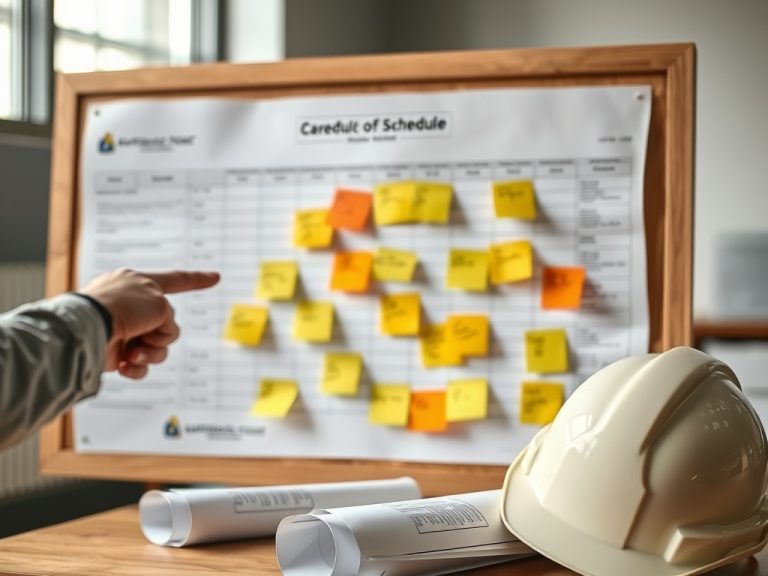
Schedule analytics helps teams detect risk by testing the logic, float, constraints, updates, and progress patterns inside the project schedule before delays become obvious in the field. The value is not software alone. It comes from disciplined schedule updates, honest status reporting, and a review rhythm that connects analytics to decisions about procurement, labor, sequencing, and change management.
Key Takeaways: This article focuses on schedule analytics construction. Use the guidance as an educational planning framework, then confirm project-specific requirements with qualified professionals and local authorities.
Audience fit: Problem-aware readers can use this as a practical problem/solution reference without treating it as engineering, legal, compliance, or project-management advice.
Risk is often visible before it is painful
The first decision is to define the exact project condition. In construction and maintenance, vague decisions create vague accountability. For schedule analytics construction, teams should write down what is being evaluated, who owns the decision, what records prove the condition, and what standard or contract requirement controls the next step.
This keeps the discussion practical. It also prevents one common problem: treating a technical subject as a preference when it may be governed by code, contract language, safety requirements, design assumptions, manufacturer instructions, or owner operations. When teams are unsure, the safer path is to confirm the requirement before work proceeds.
Metrics that deserve attention first
For related planning context, compare this topic with How to analyze job profitability after closeout, especially when decisions affect sequencing, scope, documentation, or follow-up work.
A useful review starts with the factors that most directly affect cost, quality, safety, and schedule. For this topic, the following items deserve a written check rather than a casual conversation:
- Check whether the schedule has complete logic, realistic durations, current progress, and limited artificial constraints.
- Review critical path movement, near-critical paths, float erosion, missed starts, missed finishes, and out-of-sequence work.
- Compare schedule trends with procurement logs, RFI age, submittal cycles, change events, labor availability, and inspection timing.
- Assign each risk to a decision owner, not only a scheduler. Good analytics should lead to action.
- Track whether mitigation actually improves the schedule in later updates.
This kind of decision also connects to adjacent planning topics, so readers should treat the article as part of a broader project-planning conversation rather than a standalone rule.
Why schedule quality comes before prediction
For a formal reference point, Project Management Institute schedule risk analysis can help readers separate general practice from published guidance before applying this information to a live project.

The table below is a practical way to compare the main decision points. It is not a substitute for a specification, engineered design, safety plan, or local code review. It is meant to help owners, managers, and field teams ask better questions before money, labor, or schedule time is committed.
| Decision area | What to review | Why it matters |
|---|---|---|
| Signal | What it may indicate | Best response |
| Float erosion | Work is losing flexibility | Review labor, procurement, and resequencing options |
| Frequent logic changes | Plan may be unstable or poorly updated | Audit schedule quality before drawing conclusions |
| Missed starts | Predecessor work, access, or materials are not ready | Connect schedule review to field constraints |
| Near-critical growth | More paths can drive completion | Prioritize risk meetings around converging work |
How analytics turns into field action
Credible outside references can help teams separate common practice from formal requirements, especially when decisions affect safety, compliance, or project accountability.
The practical point is simple: do not let a spreadsheet, drawing note, product brochure, or field habit become the only source of truth. Published standards, adopted codes, safety regulations, contract documents, and project-specific specifications should be checked in the right order. Where those sources conflict, the project team should escalate the issue instead of making an informal field assumption.
Subjective preferences still have a place. A contractor may prefer one sequencing method, tool, inspection format, or material workflow because it fits their crew and equipment. That preference should be described as experience-based judgment, not as a universal rule. The distinction protects the reader and makes the article more useful.
Meeting habits that turn data into action
When requirements become code-, safety-, or standard-dependent, confirm the issue against AACE International instead of relying on field preference alone.
Analytics should change the agenda of project meetings. Instead of asking only what happened last week, the team should ask which path is losing float, which activity has repeated missed starts, which constraint is blocking the next milestone, and which decision must happen before the next update. This makes the schedule a management tool rather than a reporting artifact. It also helps executives see risk before recovery costs become the only option.
This review step should be completed before the final decision is treated as closed. It gives the owner, project manager, field lead, and maintenance team a shared reference point. More importantly, it reduces the chance that the same avoidable issue will repeat on the next project, inspection, service call, or operating cycle.
For best results, attach the record to the project folder rather than leaving it in a private inbox. Include the date, responsible person, assumptions, supporting documents, open questions, follow-up action, and any limits on the decision. This small habit improves accountability without adding unnecessary bureaucracy, especially when crews, consultants, vendors, or maintenance staff change during the life of the asset or return months later to troubleshoot a related issue.
Early-warning habits for complex teams
Common mistakes usually come from missing records, unclear responsibility, or decisions made too late. Watch for these issues:
- Using dashboards that look polished but rely on poor schedule logic.
- Teams that want a wider cross-check can also read Construction scheduling basics with critical path examples before finalizing assumptions in the project record or maintenance plan.
- Focusing only on the critical path while near-critical work quietly loses float.
- Updating progress percentages without validating actual field readiness.
- Waiting for a formal delay claim before discussing schedule risk.
A practical action framework is to document the condition, confirm the controlling requirement, assign a decision owner, capture supporting records, and review the result after the work is complete. That five-part habit is simple, but it reduces confusion across estimating, field execution, safety, compliance, and maintenance handoff. It also creates a clearer trail for future audits, warranty reviews, repairs, and capital planning.
Schedule analytics earns trust when project leaders use it to make earlier, clearer decisions, not when it becomes another report attached to a meeting invite.
Use this guide as a planning aid, then review the project documents, local requirements, and site conditions before making final decisions. For work involving structural capacity, hazardous energy, code compliance, or life-safety systems, involve qualified professionals and the authority having jurisdiction when required.
A later quality check against DCMA 14-point schedule assessment can be useful when the decision touches safety, estimating controls, documentation, or project accountability.
General disclaimer: This construction and maintenance content is for informational and educational purposes only. It does not provide professional engineering, legal, compliance, safety, estimating, or project-management advice for any specific project.