No-dig gardening is a soil-management approach that minimizes routine digging and turning, then builds fertility from the surface with compost, mulch, roots, and time. The point is not to make soil untouchable; it is to avoid unnecessary disturbance so aggregation, pore space, organic matter, and soil life can keep doing more of the structural work.
No-Dig Takeaways
- No-dig systems reduce repeated soil disturbance and keep the surface protected with organic material.
- Good soil structure matters because roots need connected pores for air, water movement, and physical growth.
- Start on a small bed, control perennial weeds first, add a compost or mulch layer, and disturb only when a specific problem requires it.
What No-Dig Gardening Actually Means
No-dig is often described too simply as "never touch the soil." A more useful definition is minimal disturbance. You avoid annual deep turning, rototilling, and repeated cultivation when they are not needed, while still allowing targeted work such as planting holes, root-crop harvesting, removing a buried obstruction, or correcting severe compaction.
Every site starts differently. Compacted subsoil, construction debris, or aggressive perennial weeds may need correction before a low-disturbance routine makes sense.
The soil-health principle behind the method is well established. The USDA Natural Resources Conservation Service recommends minimizing soil disturbance as one of its core soil-health principles, alongside keeping soil covered, maintaining living roots, and increasing biological diversity. Those principles translate neatly to home gardens even though the exact techniques differ by site.
Why Soil Structure Deserves More Attention Than "Loose Soil"
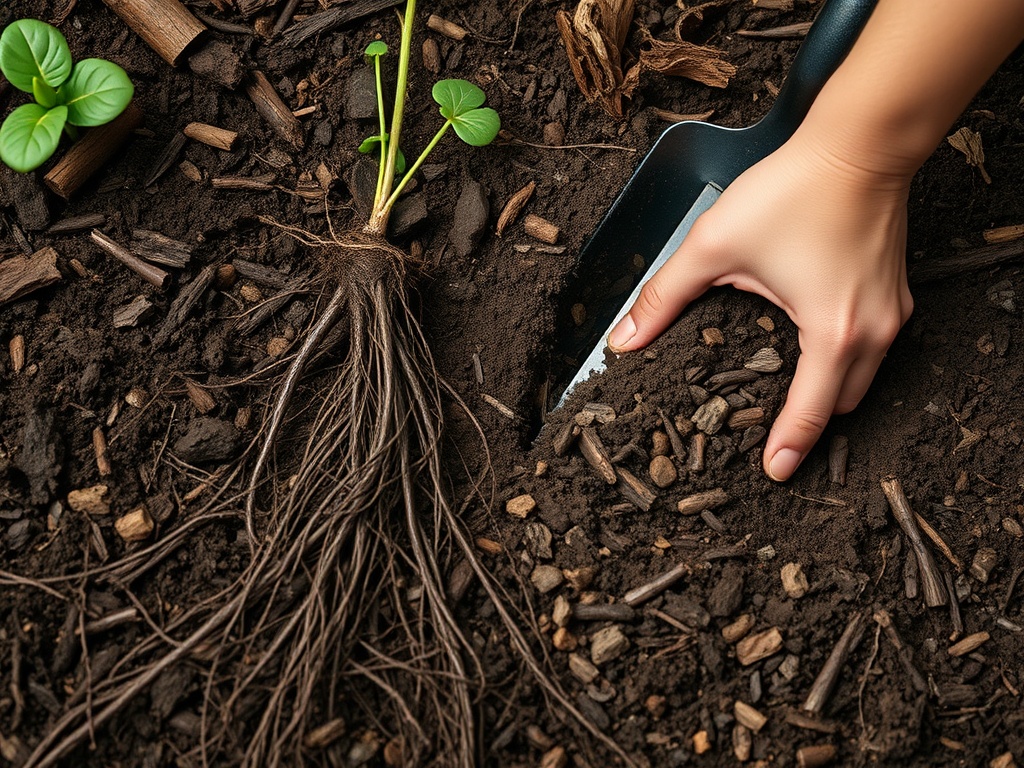
Gardeners often judge soil by whether it feels soft after digging. Structure is more complex. Soil particles can bind into aggregates, leaving pores of different sizes between them. Those spaces influence how water enters and drains, how oxygen reaches roots, and how easily roots explore the profile.
Repeated aggressive tillage can break aggregates apart and leave the surface vulnerable to crusting and erosion. It can also speed the loss of organic matter. NRCS explains that improving organic matter and reducing disturbance are associated with more stable surface structure and better infiltration. In a home bed, the practical goal is a soil that accepts water, drains appropriately for its texture, and remains penetrable without being repeatedly pulverized.
No-dig gardening does not magically change clay into loam or sand into moisture-retentive soil. Texture is largely determined by mineral particle size. What the approach can support is better aggregation, surface protection, and biological activity within the soil you actually have.
How to Start a No-Dig Bed Step by Step
1. Read the site before covering it
Check drainage after rain, sun exposure, dominant weeds, and how difficult it is to push a garden fork or soil probe into the ground. If water stands for long periods, solve the drainage or grading issue first. If the area contains bindweed, bermudagrass, quackgrass, or another persistent perennial, plan for repeated removal and monitoring rather than assuming cardboard will permanently solve it.
2. Cut or remove existing growth
Mow or cut annual weeds close to the ground. Remove seed heads. Dig out crowns or major storage roots from persistent perennials where practical. The aim is to reduce competition before the bed is covered, not to churn the entire profile.
3. Add a surface layer of finished compost
Spread mature compost over the bed in a practical layer thick enough to create a workable planting surface. Exact depth should depend on the starting soil, compost availability, crop type, and whether you are creating a new bed or maintaining an established one. Avoid treating a single depth as a universal rule.
4. Mulch where it suits the crop
Organic mulch can reduce surface evaporation, suppress many annual weeds, buffer soil temperature, and protect the surface from raindrop impact. Keep coarse mulch away from small direct-seeded areas until seedlings are established. If you want to understand the water side of that decision, Drought Watering Priorities for Home Landscapes explains why soil cover and plant priority should work together during dry periods.
5. Plant with the smallest disturbance that works
Transplants need planting holes. Large seeds need openings. Potatoes and root crops still involve harvesting disturbance. No-dig is not a purity test; it is a default of doing less rather than turning the whole bed because the calendar says so.
What Changes During the First Few Seasons
Early improvements may be operational: less bed preparation, a protected surface, and fewer buried weed seeds brought upward. Over time, roots and soil organisms can contribute to pore formation and aggregation.
Do not promise yourself instant "perfect soil." Heavy clay can remain sticky when wet. Sandy soil can still drain quickly. Newly imported compost can settle. A low-disturbance system works best when paired with realistic observation and adjustments rather than a belief that one method overrides soil texture, climate, or crop needs.
Crop diversity also helps by adding different roots and residues, allowing the bed to rely less on repeated mechanical loosening.
When Digging Is the Better Choice
There are legitimate exceptions. A compacted layer caused by construction equipment may need mechanical loosening. Buried rubble may need excavation. A new irrigation line, tree root problem, or drainage repair obviously requires digging. Some perennial weeds are easier to control when crowns and rhizomes are physically removed.
The key is to make the disturbance purposeful and local. After the correction, rebuild cover and return to a lower-disturbance routine. If you are seeing missing foliage instead of soil problems, do not assume poor soil is to blame; Why Plants Keep Getting Eaten Overnight offers a damage-first way to identify nocturnal pests before changing the bed itself.
Common No-Dig Mistakes
- Using unfinished material as planting compost. Fresh woody or poorly decomposed material can behave differently from finished compost and may be unsuitable around young roots.
- Burying a serious drainage problem. A new surface layer does not fix a compacted or poorly graded site that remains saturated.
- Ignoring weed biology. Some annual weeds are easy to smother; perennial weeds with deep roots or rhizomes often require follow-up.
- Adding compost indefinitely without observing the soil. More organic material is not automatically better. Soil testing can help guide nutrient decisions, especially in productive vegetable beds.
- Walking on the growing area. Even a no-dig bed can compact if it becomes a path. Keep beds narrow enough to reach from designated walkways.
- Treating every worm or fungus as proof of success. Biological activity is useful, but the practical measures are plant performance, infiltration, workable structure, and sensible nutrient levels.
Maintenance That Keeps the System Simple
Top up the surface when the protective layer thins, pull weeds before seed, keep pathways distinct, and avoid working saturated soil. Use compost strategically rather than automatically. If crops show recurring nutrient issues, test the soil instead of guessing.
Seasonal observation is more valuable than rigid rules. After a heavy storm, look for puddling and runoff. During hot weather, check how quickly the root zone dries below the mulch. At harvest, notice rooting depth and whether the soil breaks into stable crumbs or hard plates. Those observations tell you whether the system is improving function where it matters.
Build Soil by Disturbing Less
A no-dig garden is not defined by never lifting a spade. It is defined by making disturbance the exception instead of the routine. Start with one bed, protect the surface, keep roots growing when possible, and let several seasons of observation guide how much intervention your soil needs.
Home and garden information is provided for general educational purposes. Soil conditions, drainage, pest pressure, and local horticultural recommendations vary; consult a local extension professional or qualified specialist when site-specific advice is needed.[/