"Biodegradable" does not automatically mean a garden product disappears quickly in soil, belongs in a home compost pile, or has a lower overall environmental impact. The useful question is what the item is made from, where it is expected to break down, how long that process takes, and whether the disposal conditions match the claim.
Biodegradable Product Reality Check
- Treat "biodegradable," "compostable," "plant-based," and "recyclable" as different claims, not synonyms.
- Fiber pots can work well for seedlings, but rims left above soil can wick moisture away and some pots decompose more slowly than gardeners expect.
- Read disposal instructions and certifications, and do not assume a product belongs in a backyard compost pile unless the manufacturer specifically supports that use.
Myth: If It Says Biodegradable, It Will Vanish in the Garden
Biodegradation depends on material and conditions such as moisture, oxygen, temperature, microbial activity, thickness, and the disposal environment. A product that breaks down under industrial composting conditions may persist much longer in cool garden soil. Another item may fragment without giving a gardener the result they imagined from the word "biodegradable."
The U.S. Federal Trade Commission's Green Guides summary is useful because it explains how environmental marketing claims should be qualified. The FTC distinguishes degradable and compostable claims and says marketers should have evidence supporting the conditions and timeframe implied by those claims.
For a shopper, the front-of-package word is only the beginning.
Biodegradable and Compostable Are Not the Same Promise
A compostable product is intended to become usable compost under stated conditions. Those conditions may be home composting, municipal or industrial composting, or another defined system. Availability matters because an item that requires a commercial facility does not help much if your community does not accept it.
"Biodegradable" is broader. It describes breakdown by biological processes, but it does not by itself tell you where the process happens or whether it fits your garden timeline. "Plant-based" says something about feedstock, not necessarily end-of-life behavior. "Recyclable" depends both on material and local collection infrastructure.
Ask instead: What is the material, what disposal method is specified, does my local program accept it, and can I reuse it first?
Fiber and Peat Pots: Useful, but Not Effortless
Biodegradable transplant pots made from peat, paper fiber, coir, wood pulp, or similar materials are popular because seedlings can often be planted with less root disturbance. Their performance still varies with thickness, moisture, crop, and soil conditions.
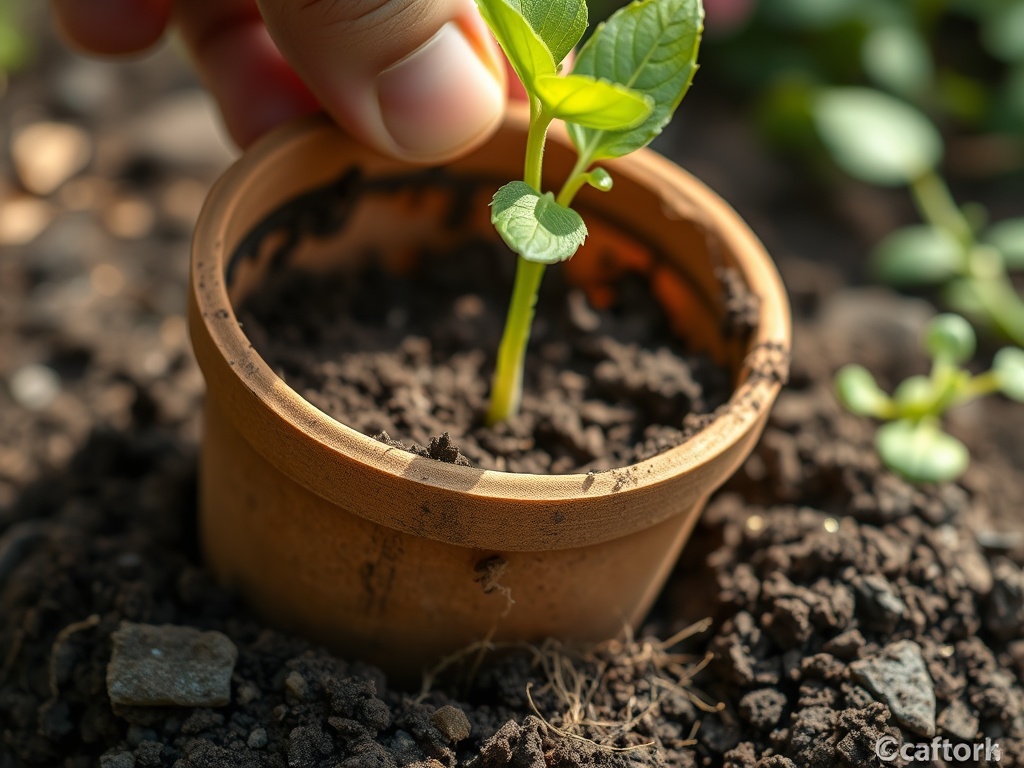
University of Minnesota Extension notes in its vegetable transplanting guidance that the top edge of a peat pot should not remain above the soil surface because it can act as a wick and draw moisture from the root ball. That small installation detail can matter more to a transplant than the environmental language on the label.
If a pot feels thick or slow to soften, follow the product instructions. Some gardeners tear away the rim or open the bottom before planting when allowed by the manufacturer. The goal is to prevent the container from restricting roots or drying the root ball, not to preserve the pot intact at all costs.
Myth: A Compostable Label Means "Put It in My Backyard Pile"
Home compost piles often run cooler and less consistently than industrial systems. Some certified compostable products are designed for commercial facilities that control heat, moisture, and processing time. If the label says industrial or commercial composting only, a backyard pile is not the intended destination.
The FTC specifically warns that compostable claims should be qualified when a product cannot be composted safely or in a timely way at home. Before buying disposable garden accessories, consider whether your local composting program accepts that material at all.
Pots Are Only One Part of the "Green Garden Product" Problem
The same scrutiny applies to weed-barrier films, labels, seed trays, twine, landscape fabrics, gloves, and packaging. Bio-based items can include coatings or mixed materials, and a technically compostable product may still be unacceptable to a local program.
Broad environmental claims can therefore mislead. Outcomes depend on sourcing, durability, reuse, transport, disposal, and what the product replaces. Simple waste-reduction choices are often more dependable than marketing language.
What Usually Matters More Than the Buzzword
Durability for repeated use. A sturdy propagation pot used for many seasons may generate less replacement waste than a single-use item, depending on material and how it is managed.
Local disposal reality. A compostable pot has limited end-of-life value if no nearby program accepts it and it does not break down well in your home system.
Plant performance. A container that restricts roots or dries out quickly is not a good choice simply because it is marketed as sustainable.
Material simplicity. Products made from one clearly identified material are often easier to route correctly than mixed-material products.
Necessary function. The lowest-waste option may be not buying an accessory you do not need.
How to Evaluate a Biodegradable Garden Product
1. Read the material list instead of relying on the largest claim on the package.
2. Look for a specific disposal instruction: home compost, industrial compost, municipal collection, recycling, or trash.
3. Check whether the claim applies to the whole product or only part of it.
4. Ask whether clips, coatings, adhesives, labels, or liners must be removed first.
5. Verify local acceptance before assuming a municipal program will take it.
6. Consider reuse. A product that can be washed and reused may be preferable for your situation even if it is not marketed as biodegradable.
7. For plantable pots, prioritize root health and follow transplanting instructions.
These checks are especially useful when a product uses vague words such as "earth friendly" or "green." The FTC advises against broad, unqualified environmental benefit claims because they can imply more than the evidence supports.
Common Misconceptions About Garden "Eco" Products
"Natural means harmless." Natural materials can still have environmental impacts or be unsuitable for a specific use.
"Bioplastic goes in the recycling bin." Many bioplastics are not accepted in conventional curbside recycling and can contaminate streams. Follow local rules and the product's disposal instructions.
"Anything made from plants belongs in compost." Coatings, binders, thickness, and processing requirements can change that answer.
"A product that degrades is automatically better." Durability, reusability, sourcing, and end-of-life management also matter.
"The pot should be left completely intact when planting." Some fiber pots can interfere with moisture movement or roots if installed incorrectly. The material and manufacturer guidance should determine how the pot is handled.
Connect Product Choices to the Whole Garden
Sustainability is easier to evaluate when you look at systems instead of isolated purchases. Reducing water demand, protecting soil, choosing locally appropriate plants, reusing durable materials, and buying fewer disposable accessories can have more practical value than swapping one single-use product for another with a greener label.
For example, No-Dig Gardening and Why Soil Structure Matters focuses on building soil function through management rather than constant inputs. During water shortages, Drought Watering Priorities for Home Landscapes shows how plant choice and irrigation strategy can reduce pressure on a landscape without relying on product claims.
Buy the Claim, Not the Buzzword
Biodegradable garden products can be useful, but the label is not a shortcut for understanding the material. Read the conditions, match the item to a real disposal pathway, protect plant health, and prefer durable reuse when it makes sense. The strongest environmental choice is the one that works in the system you actually have.
Home and garden information is provided for general educational purposes. Product composition, composting acceptance, recycling rules, and environmental marketing requirements vary by material and jurisdiction; follow manufacturer instructions and local waste-program guidance.[/