Instagram Smile Trends vs Long-Term Dental Health
A smile trend is not automatically harmful, but social-media shortcuts often skip diagnosis, bite planning, and gum health. The long-term risk comes from copying a look without asking what it does to enamel, restorations, tooth position, or the health of the tissues supporting the teeth.
TL;DR: Most viral smile advice is optimized for attention, not follow-up care. Teeth filing, heavy whitening, at-home aligners, and one-size-fits-all veneer aesthetics can look simple online while hiding the biology that makes a smile stay comfortable and maintainable over time.
Why smile trends spread faster than good dental judgment
Social platforms are great at making complex treatment look like a quick identity upgrade. What disappears from the clip is the exam, x-rays, bite analysis, gum evaluation, and maintenance plan. That missing context matters because cosmetic decisions are still health decisions.
The ADA overview of whitening is a good example of the difference between evidence-based care and trend content. Whitening can be a legitimate option. That does not mean every whitening hack online deserves trust.
Myth versus reality in popular smile content
| Trend claim | What long-term care says instead |
|---|---|
| Filing your own teeth is a harmless way to even the edges | Cleveland Clinic's enameloplasty page makes clear that enamel reshaping is a clinical procedure, not a DIY project. |
| Whiter is always healthier | Color does not tell you whether the gums, bite, and restorations are healthy. |
| Clear aligners are interchangeable because they all look similar on camera | Orthodontic movement still depends on case selection, supervision, and attachment planning, which is why [[internal:Teen Braces vs Teen Aligners: How Parents Can Compare the Options |
| Veneers are a universal upgrade | Cleveland Clinic's veneer guide shows that veneers are a real treatment with limits, maintenance, and candidate considerations. |
The hidden health questions trends rarely mention
Cosmetic trends rarely pause to ask whether the gums are inflamed, whether there is untreated grinding, or whether there is enough enamel to support the look being copied. They rarely mention that cracked fillings, recession, active gum disease, and bite instability can all make a cosmetic shortcut age badly.
That is one reason the best cosmetic consultations still begin with basics. If the gums are unhealthy, the conversation belongs closer to why gum health changes treatment planning than to aesthetics alone.
Why teenagers and young adults are especially vulnerable to trend pressure
Teens are often making their first big appearance-related decisions while still growing into their bite and habits. A trend that suggests every crooked tooth needs a near-instant esthetic fix can push families past better questions. For example, some alignment issues are treated more predictably with braces than aligners, which is why side-by-side orthodontic comparison helps more than copying influencers.
A better way to use social media as a starting point
You do not have to ignore every trend. Instead, bring the idea to a dentist and ask what part of it is reasonable, what part is marketing, and what part could create permanent trade-offs. A good clinician should be able to explain whether the trend affects enamel, gum support, bite function, or restoration longevity.
Check the treatment behind the filtered result
A polished before-and-after post rarely shows the full starting condition, the number of visits, or the maintenance required later. Lighting can make enamel look brighter, camera angles can hide bite problems, and editing can smooth gum lines that were never treated. Before copying a look, identify the actual procedure being shown and ask what diagnosis made it appropriate for that person. The visual result is only one part of the decision; the effect on enamel, gums, and function matters long after the post disappears.
Questions that reveal permanent trade-offs
Ask how much natural tooth structure would be changed, whether the result can be reversed, and what replacement cycle may follow. Whitening, reshaping, veneers, and orthodontic movement create very different commitments even when they appear similar on a small screen. Sensitivity, gum response, bite contact, and repair options should be discussed before treatment starts. A useful consultation translates an online preference into clinical consequences so the patient can compare appearance with durability and upkeep.
Bring the idea to the office without bringing the pressure
Save a few examples and point out the feature you like, such as colour, symmetry, or reduced crowding. Avoid asking the dentist to reproduce a stranger’s exact smile because tooth shape, facial proportions, enamel thickness, and gum levels differ. The clinician can then suggest several routes, including a less invasive option that reaches the same broad goal. This approach keeps social media in its proper role as inspiration rather than a substitute for examination and treatment planning.
A safer rule for cosmetic decision-making
Start with healthy tissues, favour choices that preserve enamel, and understand how the result will be maintained. If a proposal depends on rushing past gum disease, ignoring grinding, or removing sound structure without a clear reason, slow the process down. Good cosmetic dentistry should still make sense after the trend changes. The strongest outcome is not simply a dramatic first impression; it is a smile that remains comfortable, repairable, and believable over time.
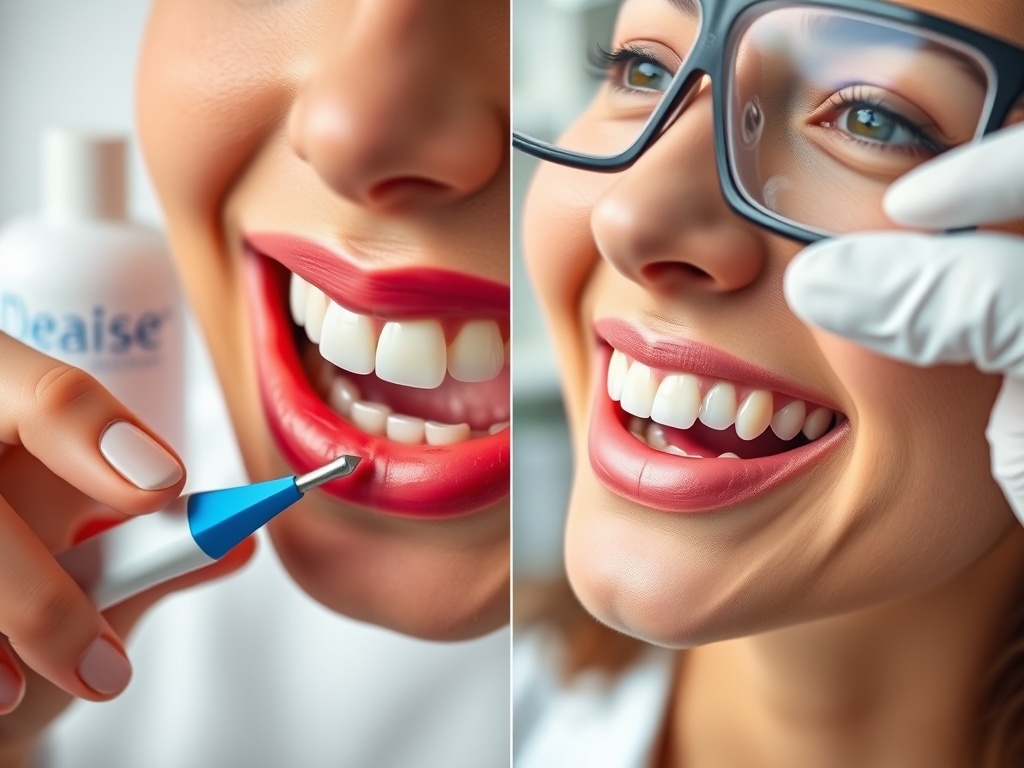
Create a conceptual editorial image contrasting risky do-it-yourself smile shortcuts with professionally supervised dental care. On one side, show whitening products and an unsafe filing tool kept away from the mouth; on the other, show a healthy natural smile being evaluated by a dentist. Use a balanced landscape layout, no text, and no logos.